

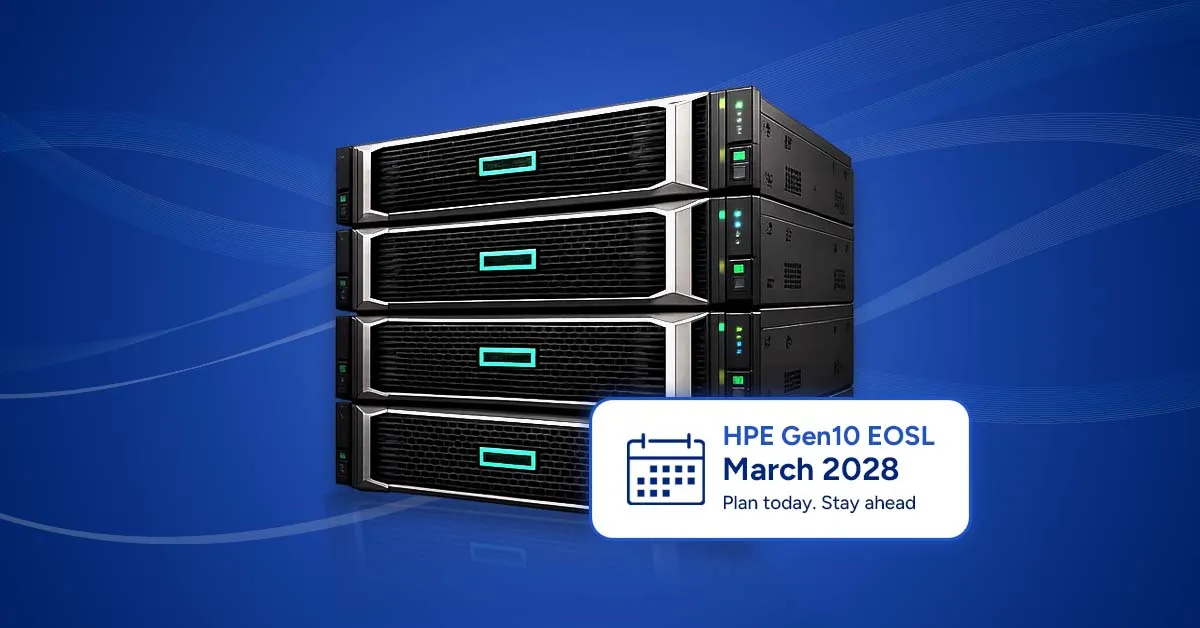
In today’s fast-moving IT environment, many organizations rely on HPE Servers to power critical workloads. With the Gen10 EOSL deadline approaching in March 2028, now is the perfect time to explore practical ways to keep your existing hardware running reliably and cost-effectively.
This guide walks you through everything from the basics of refurbished HPE Servers to advanced strategies for extending their life. Whether you manage a small data center or a large enterprise setup, you’ll find clear, actionable steps to maximize performance and delay costly replacements.
What Are Refurbished HPE Servers?
Refurbished HPE Servers are enterprise hardware units that are procured in advance from OEM channels and professionally inspected, repaired, cleaned, and tested to ensure reliable performance.
These systems are commonly deployed in EOL and EOSL environments, enabling enterprises to extend infrastructure lifecycle without requiring full system replacement. Refurbished servers provide a cost-effective alternative to new hardware while maintaining compatibility with existing enterprise workloads and configurations.
At Zaco computers, we specialize in refurbished HPE Servers across multiple generations, giving businesses access to enterprise-grade hardware without the premium price tag.
Why Choose Refurbished HPE Servers?
Refurbished HPE Servers deliver strong value for organizations looking to optimize budgets while maintaining high performance. Here are the main advantages:
- Significant cost savings: often 50-70% lower than new models while offering identical reliability.
- Immediate availability: no long lead times associated with new purchases.
- Environmental benefits: extending hardware life reduces e-waste and supports sustainability goals.
- Proven reliability: each unit undergoes multi-point inspection and testing before resale.
- Customization flexibility: easy upgrades with compatible spare parts to match exact workload needs.
These benefits make refurbished HPE Servers an intelligent choice for businesses of all sizes.
Understanding HPE Server Generations and the Gen10 EOSL Deadline
HPE ProLiant servers have evolved through several generations, with Gen10 models released around 2017. These servers remain popular due to their strong performance, security features, and scalability.
The End of Service Life (EOSL) for most Gen10 models is set for March 30-31, 2028. After this date, official HPE support, firmware updates, and spare parts availability from the manufacturer will end.
This deadline creates urgency for many IT teams. However, with the right maintenance and upgrades, you can safely operate these servers well beyond EOSL without compromising security or performance.
Key Strategies to Extend the Lifespan of Your HPE Servers
Extending the life of HPE Servers requires a combination of routine care and smart upgrades. Start with basic practices and build toward more advanced techniques.
Basic Maintenance Practices for Long-Term Reliability
Consistent upkeep prevents small issues from becoming major failures. Follow these essential steps:
- Perform routine hardware inspections every 3-6 months to check for dust build-up, loose connections, or failing components.
- Update firmware and operating systems promptly to patch security vulnerabilities and improve stability.
- Monitor temperature and humidity levels to keep servers within manufacturer-recommended ranges.
- Clean internal fans, vents, and filters regularly using compressed air to maintain optimal cooling.
- Implement real-time performance monitoring tools to catch bottlenecks early.
These simple habits can add years to your HPE Servers operational life.
Upgrading Components to Boost Performance and Longevity
One of the biggest advantages of working with refurbished HPE Servers is the ability to upgrade easily. Strategic component swaps keep systems current long after EOSL.
Focus on high-impact areas such as memory, storage, and power supplies. Switching to SSDs from traditional HDDs can improve speed and reduce heat. Adding compatible RAM modules increases capacity for virtualization or database workloads.
At Zaco computers, we stock a full range of spare parts specifically for HPE Servers, including SSDs, HDDs, memory modules, and power supplies. Our team can help you select the right upgrades for your exact models.
Advanced Optimization Techniques
For maximum lifespan, move beyond basic maintenance to proactive optimization.
- Implement virtualization to consolidate workloads and reduce physical server count.
- Use advanced monitoring software that predicts component failure based on usage patterns.
- Consider third-party maintenance contracts for post-EOSL support.
- Optimize power settings and cooling layouts to lower energy consumption and heat stress.
- Schedule regular data backups and test disaster recovery plans to protect against unexpected issues.
These advanced steps ensure your HPE Servers continue delivering enterprise performance well into the future.
Risks of Operating Without a Lifecycle Strategy
Infrastructure problems rarely announce themselves in advance. Organizations running HPE Servers without a defined lifecycle strategy tend to find this out during an outage rather than a planning session.
Unplanned downtime is the most immediate risk. Hardware operating past its service life without structured maintenance becomes unpredictable. When a critical component fails with no support contract or spare parts pipeline in place, recovery stretches from hours into days — a level of exposure that is difficult to justify to leadership after the fact.
Security vulnerabilities compound this. Once the Gen10 EOSL date passes in March 2028, HPE will no longer issue firmware updates or security patches. For organizations managing compliance obligations under frameworks such as SOC 2 or ISO 27001, unsupported infrastructure can directly affect audit outcomes and insurance eligibility.
Cost is the third pressure point. Lifecycle decisions made under pressure consistently cost more than planned ones. Emergency procurement, rushed migrations, and unplanned replacements consume budget and internal bandwidth at the worst possible time.
A structured lifecycle strategy converts these from reactive crises into manageable decisions. Organizations that handle this well treat lifecycle planning as an ongoing operational discipline, not a one-time purchase event.
Types of Refurbished HPE Servers We Offer
We provides refurbished HPE Servers in three main form factors to suit different environments.
Rack servers
(such as the DL series) are ideal for data centers. They mount vertically in standard racks, saving space and simplifying cable management.
Tower servers
(ML series) work best for smaller offices or remote locations. They stand alone, require no rack infrastructure, and offer easy access for maintenance.
Blade servers
(BL series) deliver high-density computing within a single chassis. They excel in large-scale virtualization and cloud environments where space and power efficiency matter most.
Each type has unique strengths. Choosing the right one depends on your space, scalability needs, and workload demands.
Here’s a quick overview of their advantages:
- Rack servers: Excellent scalability and centralized management for growing data centers.
- Tower servers: Simple setup and lower upfront cost for SMBs and branch offices.
- Blade servers: Superior density and energy efficiency for high-volume computing.
The Role of Spare Parts in Maintaining HPE Servers
Reliable spare parts are essential for keeping HPE Servers running smoothly after the manufacturer’s support ends. Common failure points include power supplies, storage drives, and memory modules.
Having access to tested, compatible parts prevents downtime and extends hardware life significantly. We maintain a comprehensive inventory of genuine and high-quality aftermarket components for popular HPE Servers models.
Whether you need a quick replacement or a full upgrade kit, our experts can source and ship parts quickly.
Support and Services for Your HPE Servers
Even after EOSL, professional support makes a big difference. At Zaco computers, we go beyond selling hardware.
Our refurbished HPE Servers come with warranties tailored to your needs. For clients in the UK and UAE, we offer dedicated remote support services backed by local business teams. You receive the same quality assistance as local providers but at a more affordable cost.
This combination of parts availability and expert support gives you peace of mind when operating Gen10 HPE Servers beyond 2028.
Conclusion
The Gen10 EOSL date in March 2028 does not have to signal the end of your HPE Servers investment. By choosing refurbished units, performing regular maintenance, making targeted upgrades, and partnering with a trusted supplier, you can extend reliable service for many more years.
At Zaco Computers, we help businesses maximize the value of their HPE Servers through high-quality refurbished hardware, essential spare parts, and responsive support. Whether you need rack, tower, or blade models, our team is here to help you plan, upgrade, and maintain your infrastructure efficiently.
Take action now-review your current setup, identify upgrade opportunities, and contact us to keep your servers performing at their best long after official support ends.
Explore our refurbished HPE Servers collection at zaco computers and secure your extended warranty and support options today.
Frequently Asked Questions
Q.1 What does EOSL mean for Gen10 HPE Servers?
EOSL stands for End of Service Life. For most Gen10 models, this date falls in March 2028, after which official HPE support, firmware updates, and OEM parts availability end. Proper maintenance and third-party support allow continued safe operation.
Q.2 Are refurbished HPE Servers as reliable as new ones?
Yes, when sourced from a reputable vendor. Each unit undergoes rigorous testing, cleaning, and component validation. Many refurbished HPE Servers include warranties that match or exceed new equipment coverage, delivering the same performance at lower cost.
Q.3 How can I extend the lifespan of my HPE Servers beyond EOSL?
Focus on regular cleaning, firmware updates, performance monitoring, and strategic upgrades like SSD storage or additional memory. Partnering with a supplier that offers spare parts and post-EOSL support is equally important for long-term reliability.
Q.4 What spare parts are available for HPE Servers?
Common options include SSDs, HDDs, memory modules, power supplies, and fans. These parts are fully tested and compatible with popular Gen10 and earlier models, helping you address failures quickly and avoid downtime.
Q.5 Do you provide support services for customers in the UK and UAE?
Yes. We offer remote support services with local business team presence in both regions. You receive high-quality assistance comparable to local providers but at a significantly more affordable rate.
Q.6 Which type of refurbished HPE Server is best for my business?
It depends on your needs. Tower servers suit small offices, rack servers work well for data centers needing scalability, and blade servers deliver high density for virtualization-heavy workloads. Our team can recommend the right configuration based on your space and performance requirements.